Brazil’s Sports Ministry Told the STF That Match-Fixing Controls Only Exist Because Betting Is Regulated

At a public hearing at Brazil’s Supreme Federal Court (STF) on Tuesday (3), the Ministry of Sports presented a report on match-fixing enforcement since November 2024. The awkward part for anyone arguing against regulation is that the tools the ministry listed — real-time odds monitoring, integrity decrees, international cooperation, and a national policy — all depend on licensed operators.
- Giovanni Rocco, Secretary of Sports Betting and Economic Development for Sport, gave the presentation as the last speaker in Justice Luiz Fux’s public hearing. He was speaking for Minister of Sports Paulo Henrique Cordeiro, and said he had been involved in building the secretary’s office “from zero,” under heavy pressure while the regulation was being assembled.
- The ministry’s main achievements on match-fixing map directly onto the regulated market created by Law 14.790/2023. That includes portarias on authorization consent, integrity, permitted modalities, and website monitoring — rules that only work when there are licensed companies they can actually be applied to.
- The odds-monitoring systems mentioned in the hearing, run by IC360, Sportradar, IBIA, and Genius Sports, also depend on identified operators. Those operators are required to report unusual betting patterns and cooperate with authorities, which is the entire point of having a legal market instead of a pile of anonymous traffic routed through the internet and hope.
- Rocco also tied the regulated market to sport financing. Under Law 14.790/2023, part of betting revenue is allocated to the sports sector. The ministry’s own integrity framework, in other words, sits on top of the same licensing structure that makes the revenue stream and enforcement mechanics possible.
- The catch is the provisional measure, MP 1.394. Rocco said that once everything is treated as illegal, illegal betting does not disappear; it moves to social networks, foreign platforms, and clandestine channels. In that setup, there is no integrity report, no odds alert, and no duty to cooperate — which is a useful detail for PSPs deciding whether “regulated” is a compliance preference or an operational requirement.
Rocco also noted that a Brazilian competition can be targeted by bets outside Brazil, and that manipulation networks operate across multiple countries. So the ministry’s presentation to the STF was not just a report on enforcement; it was, whether intended or not, a reminder that the anti-fraud stack only exists where the market is licensed and visible.
Related news
All news →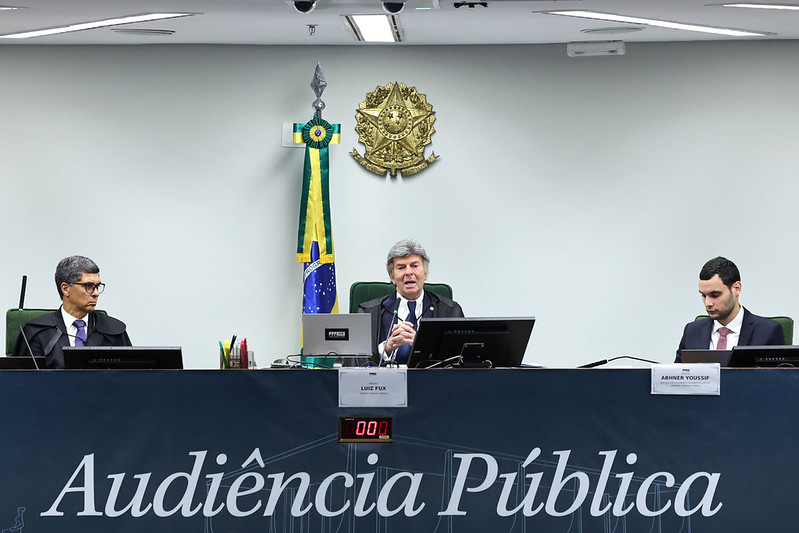
No STF, PGR avoids taking a position on Brazil’s bets MP as Fux says the Court may “decide not to decide”

Brazil’s regulated betting sector tells Supreme Court MP 1,394 gets the premise wrong: banning bets does not make the market disappear

Brazil’s betting ban does not mean no gambling, ANJL tells Supreme Court hearing
Weekly high-risk digest
Regulation, sanctions and payment news across your verticals — once a week, free.
Please check your inbox and click the link to confirm your subscription.
Please enter a valid email address!