Brazil’s betting ban does not mean no gambling, ANJL tells Supreme Court hearing

The National Association of Games and Lotteries (ANJL) used a public hearing at Brazil’s Supreme Federal Court on Tuesday (3) to argue that banning fixed-odds betting does not make gambling disappear. For PSPs and operators, the point is straightforward: when regulation tightens on paper, demand does not vanish — it can move to the illegal market.
- Pietro Cardia, legal adviser to ANJL, told the hearing chaired by Justice Luiz Fux that saying gambling has “ceased to exist” borders on misinformation. His argument was that Brazil’s own institutional history shows prohibition attempts lasting more than 20 years did not produce the intended effect.
- Cardia also said studies support stricter regulation, rather than prohibition, as the better way to reduce negative externalities from betting, including compulsive behaviour. He pointed to recent official data showing betting volume fell 32% in the last three months of figures released by the Ministry of Finance, compared with last year.
- In Cardia’s account, 2026 marked a slowdown in betting activity in Brazil, which he said showed the regulatory framework was working. He also said more than 60% of activity was in the regulated market and only 40% in the illegal market before the MP changed the picture.
- Bernardo Freire, also a legal adviser to ANJL, said at the start of the hearing that demand did not disappear after the measure was introduced — it migrated to the clandestine market. He said the effect was visible within 30 days and that it is easy to access an illegal site.
- Economist Eric Universo Rodrigues Brasil, speaking for the Brazilian Association of Economic Freedom (Able), challenged claims linking betting to household debt and delinquency. He said Brazilian families spent R$ 37 billion in 2025, against total household consumption in GDP of R$ 8 trillion, meaning the amount was less than half a percent of family consumption.
For high-risk payment players, Brazil’s debate matters less as a moral argument than as an operating one: when a market is restricted without a functioning legal channel, traffic does not evaporate — it shifts, often toward sites and payment flows that sit outside regulated rails.
Related news
All news →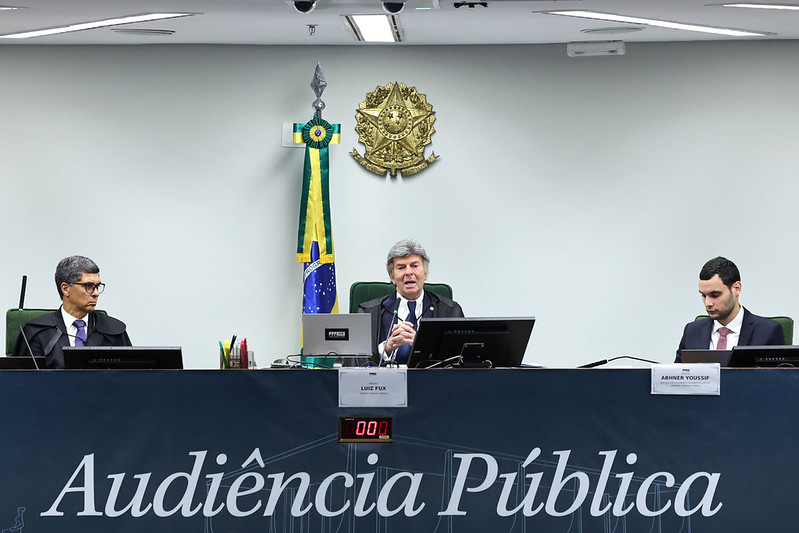
No STF, PGR avoids taking a position on Brazil’s bets MP as Fux says the Court may “decide not to decide”

Brazil’s Sports Ministry Told the STF That Match-Fixing Controls Only Exist Because Betting Is Regulated

Brazil’s regulated betting sector tells Supreme Court MP 1,394 gets the premise wrong: banning bets does not make the market disappear
Weekly high-risk digest
Regulation, sanctions and payment news across your verticals — once a week, free.
Please check your inbox and click the link to confirm your subscription.
Please enter a valid email address!