The U.S. oversight gap is widening as banks and fintechs push more novel payment activity
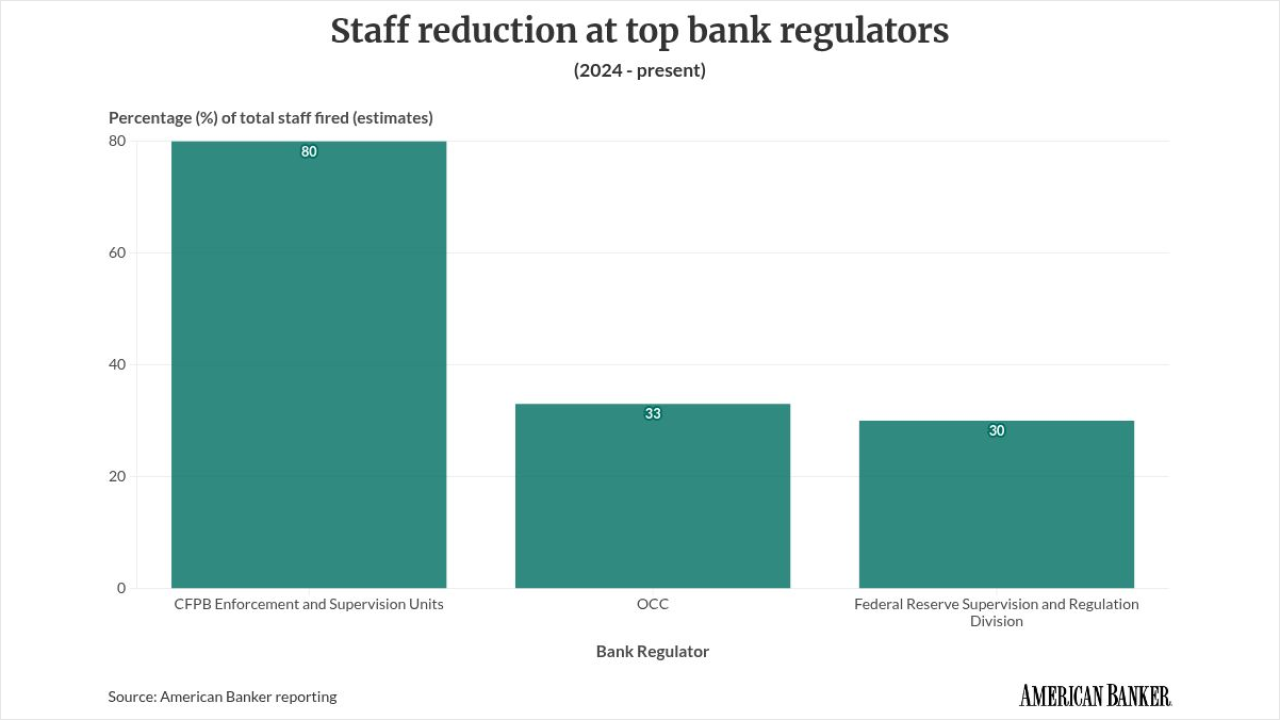
The U.S. financial system is moving into a strange setup: more novel payment models, fewer federal supervisors watching them closely. For banks and PSPs, that means internal controls are starting to do work that used to sit with regulators.
- The Federal Reserve’s Supervision and Regulation (S&R) division, under Michelle Bowman, has cut staff to 350, about a 30% reduction. At the same time, the Fed’s specialized Novel Activities Supervision program has been sunset, removing a unit that oversaw fintech partnerships, crypto-asset operations, blockchain projects, and the risks around them.
- The source says the U.S. is seeing a recent surge in bank charter applications, while fintechs are shifting from bank partners into competitors with a lower regulatory burden. That changes the risk map for traditional banks: they are no longer just providing rails, they are competing against firms that may face lighter supervision.
- For banks engaging in crypto or blockchain-based products and services, the proposed answer is not more slide decks. It is technical due diligence: continuous, automated ledger reconciliation, real-time API monitoring, and independent reserve audits. The point is to catch Synapse-style ledger failures and compliance lapses before the next examination cycle does.
- The article also argues for building contagion firewalls. In practice, that means real-time intraday liquidity tracking, automated safety switches for high-frequency settlement channels, and stress tests for nonbank counterparty defaults, so a liquidity run on one partner does not spread across shared payment rails.
- On paper, federal digital-infrastructure policy is still moving: the GENIUS Act was passed, OCC guidance updates are in motion, and the Fed payments account announcements are advancing. The catch is that supervisory capacity is shrinking while the activity set is expanding, which leaves private market discipline to carry more of the load.
For high-risk PSPs, the practical message is simple: if oversight is thinning, bank partners will increasingly demand the kind of controls that stand up in an internal audit, not just in a vendor deck. The institutions with FDIC protection and direct central bank access can turn that into a selling point; the rest will be judged on whether their rails, reserves, and reconciliation actually hold up.
Related news
All news →

%20(2)%20(1).png)
Weekly high-risk digest
Regulation, sanctions and payment news across your verticals — once a week, free.
Please check your inbox and click the link to confirm your subscription.
Please enter a valid email address!