Home
/
news
/
Brazil’s Federal Police tie illegal betting platforms to a R$ 4.3 billion money laundering scheme
news
Brazil’s Federal Police tie illegal betting platforms to a R$ 4.3 billion money laundering scheme

Brazil’s Federal Police launched three simultaneous operations on Tuesday, 24 November, targeting money laundering, illegal funds movement, and foreign exchange evasion. For PSPs, acquirers, and banks, the useful detail is not the headline number alone but the payment stack behind it: shell companies, payment institutions, bank transfers, and cryptoassets.
- The operations were named Narco Azimut III, Narco Oriente, and Narco Alicerce, and they involved about 130 federal police officers executing 72 court orders: 36 temporary arrest warrants and 36 search-and-seizure warrants. All of them were issued by the 5th Federal Court of Santos (SP).
- In the Narco Oriente and Narco Azimut III investigations alone, the Federal Police identified transactions exceeding R$ 4.3 billion. According to the agency, the groups used shell companies, payment institutions, bank transfers, and cryptoassets to move money inside Brazil and abroad.
- Narco Oriente accounts for the larger share, with more than R$ 3.2 billion. The investigation points to a transnational criminal association led mainly by Chinese nationals, which allegedly built a permanent system for moving and hiding funds using payment institutions, companies registered in other people’s names, and a network of collaborators in the public and private sectors.
- One of the schemes flagged in the case involved illegal betting platforms. Companies opened under third-party names reportedly ran online betting sites that let users deposit funds but made withdrawals difficult or impossible. In some cases, users were pushed to make additional deposits to release supposed winnings.
- The same financial structure was also used for the so-called task scam and fake job offers. Victims were first paid small amounts for simple tasks, then asked to deposit money to unlock larger gains. Investigators also found fake overseas job openings, where applicants paid to continue through hiring processes for jobs that did not exist.
- The Federal Police said the money flowing through the structure came mainly from digital scams. The network was also used for foreign exchange evasion and to make the money harder to trace. A second front, Narco Azimut III, is investigating another group suspected of moving more than R$ 1.11 billion through high-value bank transfers and cryptoasset transactions, with warrants served in São Paulo, Guarulhos, Itatiba, Avaré, Mongaguá, Jundiaí, and Foz do Iguaçu (PR).
Related news
All news →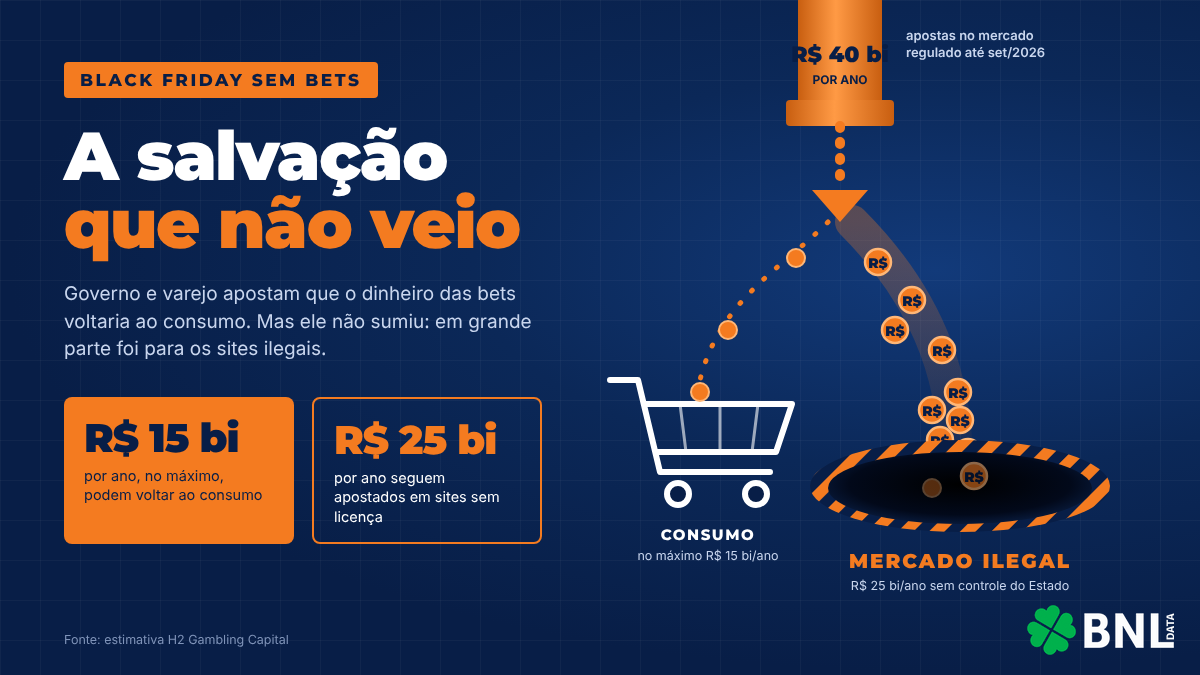


Weekly high-risk digest
Regulation, sanctions and payment news across your verticals — once a week, free.
Please check your inbox and click the link to confirm your subscription.
Please enter a valid email address!