Adyen Competitors in 2026: white-label payment processing and the six providers merchants compare against it
Adyen is still the benchmark for branded payments on someone else’s rails, but in 2026 it also spent a lot of time buying adjacent software: Talon.One for €750 million and Orb, both closed on July 1. For high-risk PSPs and SaaS platforms, the real question is simple: do you want a payments stack under your brand that runs on Adyen’s licenses, or a gateway you control with acquirers you can swap out later?
- Adyen’s white-label setup is not a generic “white-label” offer in the loose market sense. Through Adyen for Platforms, a SaaS company or marketplace can offer payments, accounts, lending and card issuing under its own brand on one integration, with dozens of payment methods in 150+ countries. Adyen handles verification and compliance, while the platform sets user fees in Adyen’s dashboard.
- Pricing is spelled out more clearly than many competitors do. Each transaction costs a fixed $0.13 plus a fee for the payment method. For Visa and Mastercard, that fee is interchange and scheme costs passed through plus Adyen’s 0.60% markup. A minimum invoice can apply depending on industry, but there is no setup or monthly fee. Other Adyen products are priced separately.
- The compliance boundary matters here, especially for gambling. Legal gambling merchants need extra documentation before onboarding. Platforms that let others sell gambling are turned away, as is any gambling service based in the US. That makes Adyen a poor fit for certain high-risk platform models even when the processing economics look fine on paper.
- In 2026, Adyen’s biggest strategic moves were about building around payments, not fixing processing capacity. On April 23, it agreed to pay €750 million in cash for Talon.One, a loyalty platform with 300+ merchants, as PaySpace Magazine reported. On June 28, it announced a Category II license from the Central Bank of the UAE, which gives it direct access to local payments in a market it has served since 2020.
- Both acquisitions closed on July 1. Orb, the San Francisco billing platform, continues to support merchants that run several payment providers during the first phase. Meanwhile, Adyen said heavier spending on its team and products would keep its 2026 margin at 50%, even as third-quarter volume reached €451.1 billion and third-quarter net revenue rose 23% to €738.1 million.
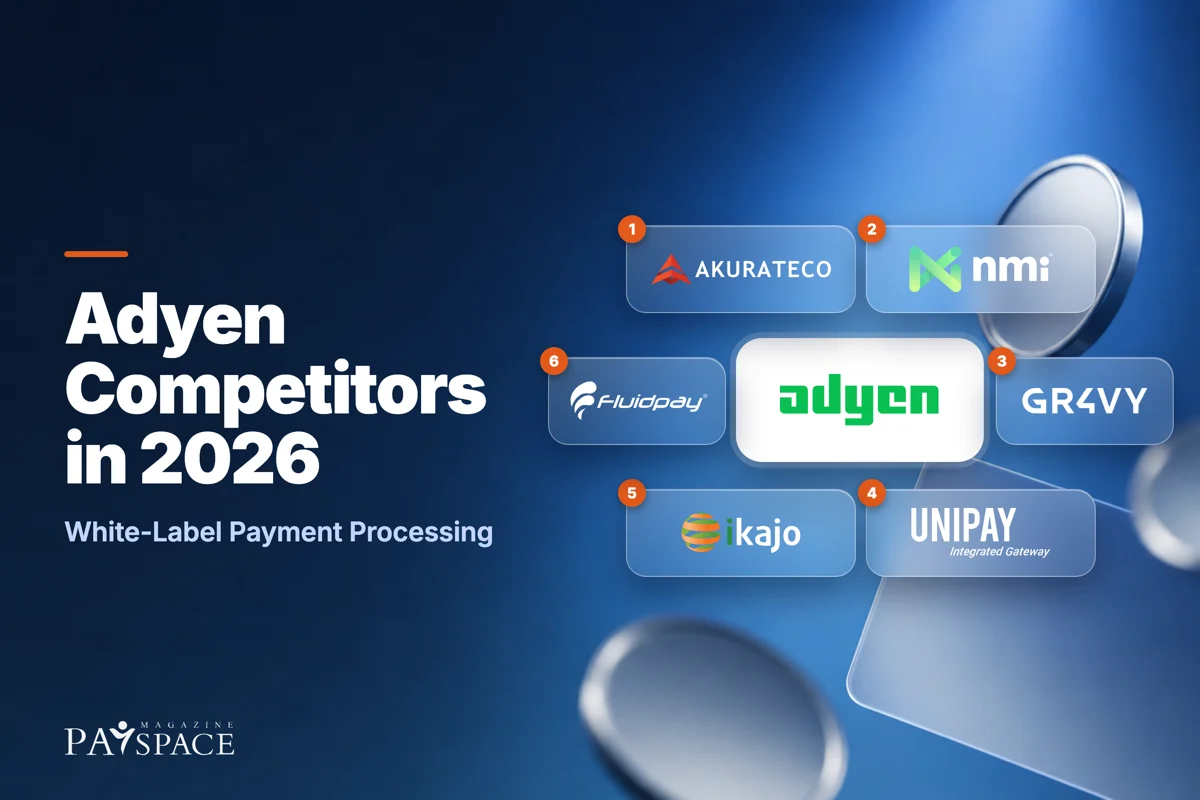
Against that backdrop, the six Adyen competitors below are really a map of different control points. Akurateco, NMI, Gr4vy, UniPay and Fluid Pay run on acquirers that you or your partners bring. Ikajo goes further by adding merchant accounts through 60+ partner banks, including gambling, which Adyen bars from its platforms. UniPay publishes a white-label price starting at $15,000 a month, Akurateco shows figures by deployment, and NMI, Gr4vy and Fluid Pay do not publish amounts.
Related news
All news →
No STF, PGR avoids taking a position on Brazil’s bets MP as Fux says the Court may “decide not to decide”

Brazil’s Sports Ministry Told the STF That Match-Fixing Controls Only Exist Because Betting Is Regulated

Brazil’s regulated betting sector tells Supreme Court MP 1,394 gets the premise wrong: banning bets does not make the market disappear
Weekly high-risk digest
Regulation, sanctions and payment news across your verticals — once a week, free.
Please check your inbox and click the link to confirm your subscription.
Please enter a valid email address!