US Justice Department Seizes $84 Million From Payments Firm Capstone
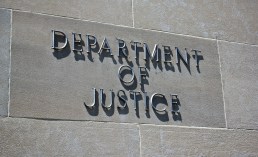
The US Justice Department has frozen $84 million in accounts linked to Montana-based payments business Capstone, alleging the company was unlicensed, misrepresented its business to US banks, and processed payments that may have involved two unnamed cryptocurrency firms. For PSPs and high-risk acquirers, the case is a familiar reminder that “just moving money” can turn into a money-transmitting and AML problem very quickly.
- The Financial Times reported on Friday, Sept. 25, that prosecutors in the Eastern District of California froze $84 million in Capstone’s accounts at two banks. The FBI also executed a search warrant at the Sacramento, California, home of Capstone owners or controlling persons Kotaro Shimogori and Mary Jeanne Thompson.
- According to the FT, citing unnamed sources, the two crypto firms were stablecoin issuer Tether and its affiliated exchange Bitfinex. Tether and Bitfinex told the FT they had “no knowledge of the fraudulent conduct by Capstone alleged by the DoJ” and said their “assets held at EQI are limited.”
- The report says Capstone moved money at the direction of Dominica-based bank EQIBank, based on a civil justice complaint filed by the Justice Department in California. EQIBank, for its part, filed a motion seeking the seized funds and argued that it was misled by Capstone and believed Capstone was “properly registered.”
- The Justice Department’s complaint also alleges that Capstone helped scammers engaged in impersonation fraud convert stolen cash into stablecoins. The government says Capstone turned the stolen cash into crypto and transferred the crypto, minus fees, to a foreign counterparty, which would make the business an unlicensed money-transmitting operation in at least six states where that conduct is a felony.
- Capstone’s lawyer told the FT the company “denies any wrongdoing” and plans to challenge the government’s civil asset forfeiture complaint by filing a motion to dismiss. The lawyer also said Capstone has cooperated with the investigation and hopes to resolve the matter quickly. EQIBank did not comment to the FT and did not immediately reply to PYMNTS’ request for comment.
For high-risk payments operators, the relevant detail is not the crypto headline. It is the pattern: a fiat-to-crypto flow, a bank that says it was misled, a processor alleged to have been unlicensed in multiple states, and a forfeiture action that goes straight to bank accounts. That combination is exactly the sort of thing correspondent banks and acquirers now model as a licensing, fraud, and source-of-funds risk, not just a client onboarding issue.
Related news
All news →


Weekly high-risk digest
Regulation, sanctions and payment news across your verticals — once a week, free.
Please check your inbox and click the link to confirm your subscription.
Please enter a valid email address!